Showing posts with label science. Show all posts

Wednesday, September 16, 2015

Color Themed STEM in the Classroom

Do you spend time with colors in your classroom?  Does your entire class dress in a certain color on a certain day?  Do you read color themed books?  Do you practice reading and spelling color words?  Do you sing songs about colors?  Do you make colorful artwork?  If the answer to any of these questions is "yes," then you may want to incorporate an exciting (according to my students) and easy color themed STEM activity into your color fun.


One of the most important parts (if not the most important part) of doing STEM activities in your classroom is gathering and organizing your materials.  For this color themed STEM activity you will need:  food coloring, various household liquids (I used water, vinegar, shaving cream, and oil), eye droppers, see through contains (I used Mason jars), and some small paper cups.
To go along with our activity we completed mini books to record our predictions, observations, and creations during the experiment.


Because of time restraints, we conducted part of the activity as a whole group, with yours truly doing the demonstrations.
To begin, students predicted what the water would look like after adding the colors and then I added them.  Next we did vinegar.  Nothing crazy happen with the water or the vinegar.


We added colors to the shaving cream.  It didn't mix.  The students really liked how it turned out.  It was pretty funny, a couple of my young learners thought the shaving cream would explode.  They were a little relieved.


The last observation was how color mixed with oil.  Oil really has the coolest reaction.  Because the food coloring is mixed with water, the colored water doesn't mix with the oil.  It created pretty little bubbles in the oil.


While I conducted the demonstration, the students asked lots of questions and we discussed why the colors looked the way they did after adding them to the liquid.  We also talked about mixing colors to create new colors, which was the segue to the final part of our color themed STEM project, creating your own color.

Each student got their own small cup and shared the eye droppers and colored water.  They mixed two or three colors until they reached their favorite new color.  After they created their color, they illustrated it and wrote about it in their mini books.


This activity worked out really well.  It was simple and engaging.  I will definitely use it again next year when we are focusing on color.  I'll probably make one change by adding some additional liquids into the mix.

As far as other activities during the week, we did quite a bit of work with color words during our literacy time.  Sorts, matches, writing, and centers...students need plenty of work reading and writing color words.
I'll leave you with a few of my favorite color themed read alouds.
(Bear Sees Colors by Karma Wilson, The Day the Crayons Quit by Drew Daywalt and Oliver Jeffers, The Day the Crayons Came Home by Drew Daywalt and Oliver Jeffers, Dog's Colorful Day by Emma Dodd, A Color of His Own by Leo Lionni, White Rabbit's Color Book by Alan Baker, Monsters Love Colors by Mike Austin, Pete the Cat: I Love My White Shoes by James Dean and Eric Litwin, Red: A Crayon's Story by Michael Hall, and Sky Color by Peter H. Reynolds)
Wow! such variety about one topic.  That is why learning about colors can take your so many directions in your classroom.


What are some of your favorite color themed books and activities?  I'd love to know.
Have a great week.

Sunday, November 17, 2013

In November: A Mentor Text and a FREE Graphic Organizer

Hi All.
It has been an eventful week in our household and in particularly for my daughter.  On Wednesday A's dear kindergarten teacher did what I could not bring myself to do, she pulled one of A's very loose front teeth.  Bless her heart.  We were finally able to have a meal with no tears that evening.
On Friday A's class had pajama day.  I know, huge thrill, right?  Even better, A was given a Key Award at a school wide assembly.  Her award was for speaking with good purpose.  We are very proud of her.
By Saturday her other top tooth was super loose and this time she got it out on her own.  An award, pajama day, and two visits from the Tooth Fairy in one week, big news for a 6 year old.

Moving on . . .
I'm linking up with the Collaboration Cuties for their weekly Must Read Mentor Text Linky.  This week's topic is science.  My must read recommendation is by one of my favorite authors and is perfect for this time of year.  It is In November by Cynthia Rylant.

This book is a wonderful jumping off point for all sorts of science topics.  Changing seasons, migration, hibernation, weather, and more.  The illustrations are lovely and capture the feel of this time of year.  

In addition to science topics, there are many skills you can hit on with this book, such as inferencing and adjectives.  Below is a graphic organizer I created to use with this story to combine our science with writing.
After listening to In November, my students will complete the bubble map and eventually use it to write their first paragraphs.  Of course if you have older students, each bubble can be its own paragraph to create an essay.
If you would like a free copy of this graphic organizer, click on the picture below.

In November is a great addition to any elementary classroom library.  This book establishes the mood of November that your students will identify with and enjoy.

For more must read science recommendations, be sure to visit the Collaboration Cuties.  Thanks so much for reading and have a great week.

Sunday, October 20, 2013

Going Batty: A Mentor Science Text and Two Free Bat Activities

We're getting close to Halloween and you know what that means . . . Kids that are very, VERY excited and probably sugared up.  Well if you are in the younger grades, it is a great time to channel all of that energy into some creepy science learning with bats.
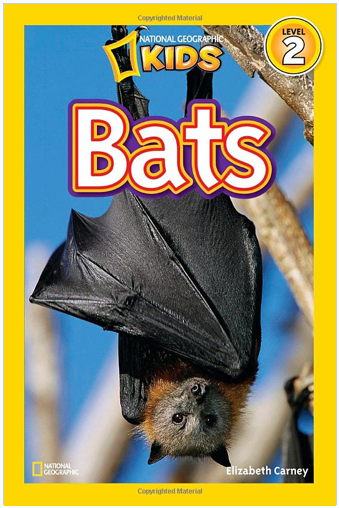
Bats are so interesting and a great topic during October.  One book I really love to use in my class is National Geographic Kids:  Bats.  True to form, this book features loads of photographs of this nocturnal creature.  This text has many interesting facts that your student will love to hear like what bats eat, where bats live, how they use echolocation, and more.


After your kiddos learn some facts about bats, they can complete the graphic organizer that is pictured below.  (The clip art is from Melonheadz.)

Click on the picture if you would like a free copy to use with your students.


Also, if you are looking for a fun little craftivity to go along with your study of bats, click on the picture below for a free template and instructions for this bat headband.  It's really easy to make and super cute.


For more tried and true science text recommendations and activity ideas, be sure to visit the Collaboration Cuties.  
Thanks so much for stopping by.

Sunday, September 15, 2013

The Seasons of Arnold's Apple Tree: A Science Mentor Text and a Free Graphic Organizer

It's September and that means one thing in an first grade classroom . . . it's apple time.  The number of activities you can do with apples is only limited by your time.  Math, science, social studies, language arts, and more, apples lend themselves to so many subjects.  I'm linking up with the Collaboration Cuties to share one of my favorite apple books for their Mentor Text Linkup.  This week's topic is science.
A fav apple book of mine is Gail Gibbons' The Seasons of Arnold's Apple Tree.
This text follows Arnold and his favorite apple tree through all of the seasons.  Arnold loves spending time at the apple tree and it's fun to see how each season brings new adventures with it.  The illustrations in this book show the life cycle of an apple tree, as well as a glimpse at the four seasons.
This book is a simple and engaging story that offers many opportunities for extensions and activities.  One activity I like to do with this story is a four square writing assignment.  Later in the year we use four square graphic organizers as a jumping off points for writing paragraphs.  But in September, my first graders' four squares are a little more basic.  
If you would like a FREE copy of this four square graphic organizer, click on the picture below.  It is a great way to combine science and writing.  (Of course older students can certainly take this graphic organizer further by writing sentences.  A sentence in every square can add up to a coherent five sentence paragraph.)


Here is the scoop on this week's mentor text pick . . .

Be sure to visit Collaboration Cuties for more tried and true science text recommendations.

Sunday, August 18, 2013

Oscar and the Snail: A Science Mentor Text

Hi all.  I'm linking up once again with the Collaboration Cuties for their weekly Mentor Text Link Up.  This week's topic is science.
My pick is Geoff Waring's Oscar and the Snail: A Book About the Things We Use.  This book caught my eye because of the lovely illustrations (plus we have a gray and white spotted cat at home and Oscar reminds me of her).


Oscar is in a garden and wonders about the "things we use."  His friend snail provides him with some really good answers.  He learns what materials birds use to build their nests.  He sees that some things float and some things sink.  He also finds out where things like paper, bread, and bricks come from.  This book can help your kids start make connections between things found in their everyday life and where those things originated.


And best of all, this book is part of a series of Oscar science books.  I love reoccurring characters.  The other books are just as gorgeous and cover topics such as sound, growing, electricity, and more.   
Oscar and the Snail proves that science topics can be presented in a simple and artful way.

There are more super science recommendations at Collaboration Cuties.  Be sure to check them out.


Also be sure to check out the BIG Back to School Sale at Teachers Pay Teachers.  
This is my first sale and I would love for you to check out my little store.

Thanks for reading and have a great week.

Sunday, July 21, 2013

How Did That Get In My Lunchbox?: A Science Mentor Text

Hi Friends.  I'm not going to bring you down by telling you how few days I have left for summer break.  Instead, I'm trying to get my good attitude on.  One way to stop focusing on the end of a summer is to look forward.

Thinking about wonderful books for my class is a nice way to look forward.  Read alouds are really my favorite time of the day.  The students are always so engaged, it is so rewarding to see their connections to fabulous books.
Speaking of fabulous books, I'm linking up with the Collaboration Cuties weekly Mentor Text Linkup to share a favorite science text.  My choice this week is How Did That Get In My Lunchbox? by Chris Butterworth.


In my class we do work with nutrition at the beginning of the year.  How Did That Get In My Lunchbox? traces the path of food from farm to school and is perfect for this topic.  It gives a closer look at parts of plants, and food/nutrition related vocabulary.  The illustrations are colorful and fun.  
Even better, How Did that Get In My Lunchbox? can do double duty as a resource for your class' study of economics.  Don't you love books that can be brought out again later in the year?  
Since we're on the topic of food, D and I went to an event last night that was very yummy.  It was a fundraiser for the Southern Foodways Alliance which is dedicated to the preservation of southern foodways and recipes.
It was a dinner with five courses featuring five different top chefs in our area.  Date nights are rare and we had a fab time.

But enough about my weekend.  Here's the scoop on my science pick for this week.
For more science text recommendations, be sure to head over to Collaboration Cuties.
Have a great week.

Sunday, June 16, 2013

Who Sank The Boat?: A Mentor Science Text

Happy Father's Day!
It's the third Sunday of the month which means its science day on Collaboration Cutie's Mentor Text Link Up.  The book I would like to share is Pamela Allen's Who Sank the Boat?

This book has been around for a while.  It really lends itself to many reading skills.  I usually use it for predictions.  It is also perfect for sequencing and rhyming.  Who Sank the Boat? can also be a fun addition to your science library to start a conversation about what makes things sink or float, or even balance.
It is about a group of farm friends boarding a row boat one at a time.  There is suspense as each animal enters the boat.  Will this one be the one who finally sinks the boat?  At the end students find out it was the least likely character the caused the boat to go finally down.


I found simple to execute experiment to go with this story at Indirect Observations.  Students can make a boat out of foil and see what allows the boat to float or what causes it to sink.  To tie the experiment into the book, use plastic animals to represent the characters.  Click on the pic below if you would like more info.

If you have a minute, take a look at this YouTube video short for the Who Sank the Boat?  Pretty funny.


I recommend this book for your library.  I think you will find lots of uses for it.
Here is the low down:

Be sure to stop by Collaboration Cuties for more teacher tested science texts for your classroom.

Sunday, May 19, 2013

Me and My Amazing Body: A Must Read Science Mentor Text and A Writing FREEBIE

Hi friends.
This week's Must Read Mentor Text Link Up's theme is science.  The book I chose is Joan Sweeney's Me and My Amazing Body.  Sweeney is the author of Me on the Map.  If you like Me on the Map, I'm sure you will find Me and My Amazing Body fab as well.
This book is a great overview of the different parts of the body and how they all work together.  My students really seem to enjoy the illustrations.  In the end Sweeney highlights how our bodies are very much the same, yet we are all different.  What a nice message.

One way I use this book is as a jumping off point for a writing lesson when we create our Boo Boo Map graphic organizers.  If you are unfamiliar with a Boo Boo Map, it is basically a graphic organizer where students mark places on a body outline where they have had injuries.  You know how much kids like sharing about boo boos.
Each marked boo boo can be an idea for a story.  Students keep these graphic organizers in their writing binders all year.  If they have a problem coming up with a topic, the Boo Boo map might me the perfect resource.
If you would like a free copy of this activity you can click on the picture below.  I included some different versions of the boo boo map, one is super modest (just in case).  The clip art is from Scrappin Doodles.

Me and My Amazing Body is a great science text to support this writing lesson and a great book on its own.  If you do not have a copy in your class library, you really should check it out.
Here is the break down:
There are other great science text recommendations at Collaboration Cuties.  Be sure to take a look.
Thanks for reading.
Best.

Sunday, April 21, 2013

Super Science Selections: A Must Read Mentor Text and a FREE Science Graphic Organizer

Hi Friends.
I'm linking up with the Collaboration Cuties for the science edition of Favorite Mentor Texts.  I've been thinking about one science text to share and I'm afraid I'm going to have to cheat a bit this week.
I'd like to highlight a favorite science text author, Gail Gibbons.  She has written  s e v e r a l  science texts that are great for the early elementary classroom.
Below you will find a free printable that can go along with any of Gibbons' books.  Students can write words in the appropriate boxes to show what they know about a given science topic.  After reading a book that covers that topic, students will add more information to their graphic organizers.  This activity can be done individually, with partners, or with the whole group.  
If you would like a free copy of this printable, click on the picture below.  The clip art is from Scrappin Doodles.


If you do not have any of Gibbons' books in your library, go check some out.  They are great resources to have.  If you are looking for some other great resources, check out the other links at Collaboration Cuties' Must Read Mentor Texts Link Up.
Have a great week and best of luck if you are testing.